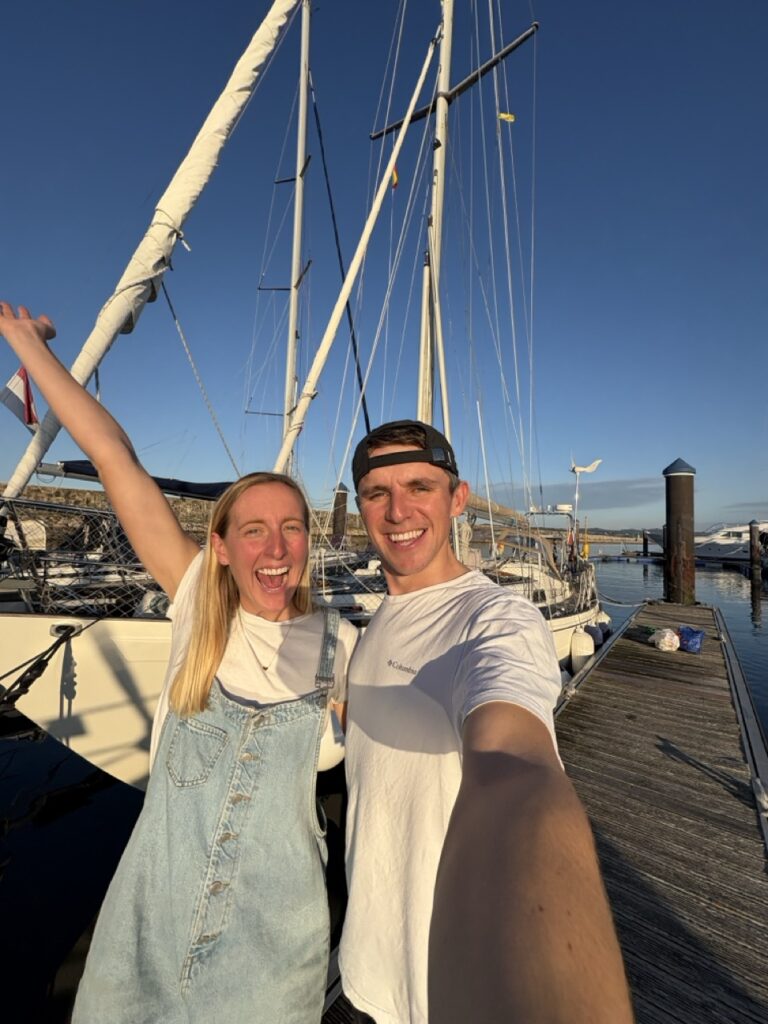
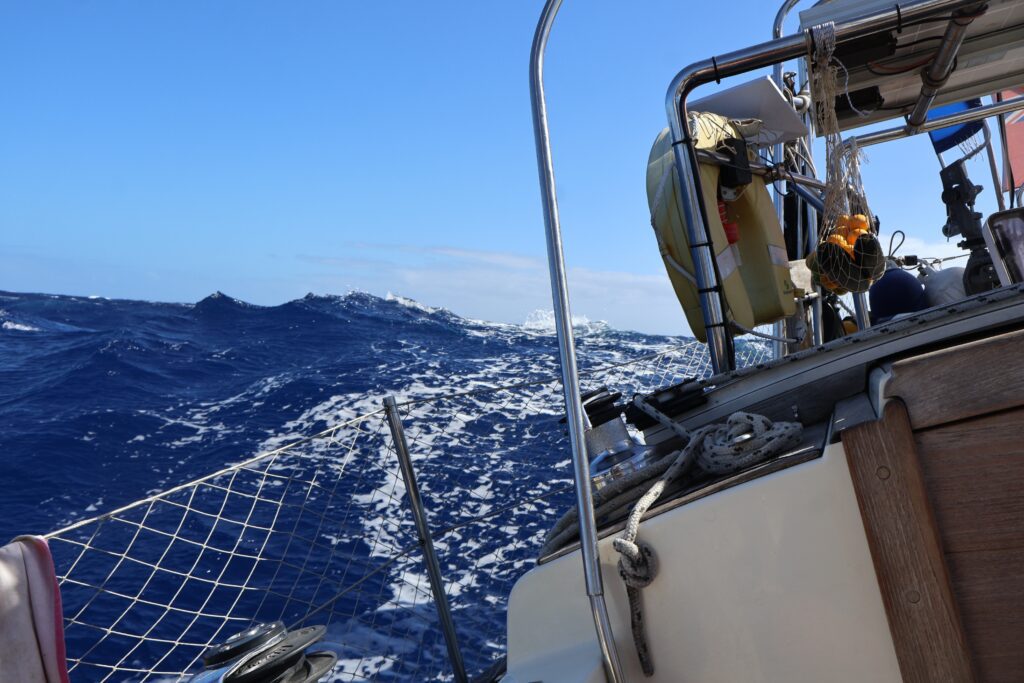
Since buying our boat Calidris Alba in May 2025, we’ve sailed over 6000nm in just 9 months. We’ve tackled the infamous Bay of Biscay, dodged Orcas in Spain and Portugal, and crossed the vast Atlantic Ocean. So how on earth did we go from setting foot on a sailing yacht for the first time 3 years ago, to sailing thousands of miles on our very own Rival 41 CC? Keep reading this blog on our journey from the UK to the Caribbean, and find out how we made it happen.
Overview
Our First 6,000 Nautical Miles at a Glance
- Boat: 41-foot sailing yacht Calidris Alba
- Distance sailed: approximately 6,000 nautical miles
- Time period: 9 months (May 2025 to January 2026)
- Starting point: United Kingdom
- Major milestones: Crossing the Bay of Biscay, sailing down the coast of Spain and Portugal, then crossing the Atlantic Ocean
- Crew: Fran and Jack, two relatively new but excited sailors
In this article
Buying Calidris Alba
Fifteen different boats, six different marinas across the UK, four months of searching – finding the right sailing boat was anything but straightforward. The boat search which eventually led us to Calidris Alba was full of twists and turns.
We set out on our boat search with a long list of criteria; strong seaworthy construction, centre cockpit with large aft cabin, skeg hung rudder and encapsulated keel, U-shaped galley, between 35-42 feet. The list went on.
After lots of online searching on yachtworld.com and Apolloduck.com, the same sort of boats kept coming up. Westerly Oceanlord, Westerly Oceanquest, Moody 38, Moody 346, Hallberg-Rassy 352 – we viewed them all. All lovely boats, a few of which we came quite close to making an offer on. But there was always just something missing, a compromise on storage space, the shape of the galley, or the age of the engine. Nothing too serious but not the boat that got us really excited, nothing that we could see ourselves living on for the foreseeable future.
Then we viewed Calidris Alba. Before the viewing we were a little uncertain. The Rival 41 wasn’t a boat we had come across before, so a little reading beforehand gave us a bit of background and revealed a design with an excellent reputation.
After seeing the listing online, I called the owner to arrange a viewing which turned out to a lengthy conversation about the boat. I immediately texted Fran “we HAVE to view this boat”….
The moment we stepped on board it was clear she was the perfect boat for us. Clearly well looked after, set up for liveaboard sailing and met almost all of our search criteria. We instantly knew we had to make an offer.
After some back and forth, and once we had settled on price with the previous owner, the boat buying prices went fairly smoothly. After the standard haul out, survey and paperwork, she was ours just 4 weeks after that first viewing. A huge wave of excitement, anticipation and nerves was building in us both. Our adventure was about to begin.
To see more of our boat buying search check out this video on our YouTube channel:
Planning our journey and learning to sail
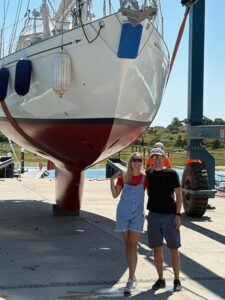
As soon as our boat purchase had gone through, we got to work on getting her ready for us to move on board. We spent two months in the boatyard, mostly working on bringing her back to her former ocean-crossing glory, after she had been sat in a marina for a few years with previous owners. We tackled the anti foul, replaced both the toilets, repainted and retiled lots of the interior including both heads (bathrooms) and the galley. We also replaced the cutlass bearing, reconditioned all seacocks, renewed our safety gear – the list goes on and on.
Working in the boatyard was the perfect way for us to get to know our new home. Learning about all of the different systems onboard, even just knowing what’s behind each floorboard and at the back of every cupboard was a huge learning experience for us both. It was a conscious decision to do almost all of the work ourselves. Not only to save money, but also to learn. We knew once we were out on the ocean, should something go wrong we needed to have the confidence to fix things, at least well enough to get to the nearest harbour. What better place to learn than whilst the boat was out of the water.
The time in the boatyard flew by. We were blessed with a hot and dry English summer, which made boat jobs easier and harder at the same time. Paint would dry in an instant, but sanding in full body suits was tough, tough work. Before we knew it, we had rebooked the crane to relaunch back in the water at the beginning of July 2025.
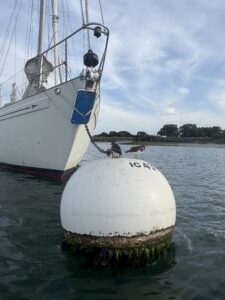
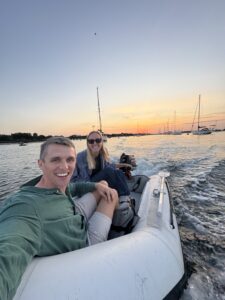
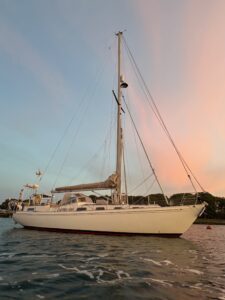
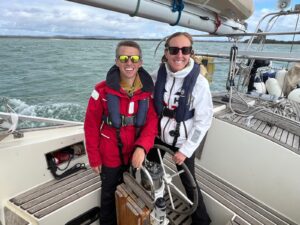
Once floating again, we spent two months living on board on a mooring buoy in Itchenor, part of Chichester Harbour. A stunning part of the South Coast of England, Itchenor gave us the perfect place to plan our trips further afield. We learnt to adjust to life on board, practice our manoeuvres on a quiet pontoon, and welcomed lots of family and friends on board for the first time. These months also gave us time to plan our route and learn how Calidris Alba sails. Being a cutter rig with heavy displacement, she was unlike any of the training boats we had sailed on before, so most of our time was taken up with quite literally learning the ropes.
We’ve written up the story of how we went from working corporate jobs to living aboard in a previous blog, check our ‘Our Story‘.
Preparing our boat for offshore sailing
Preparing ourselves to sail around the Solent and South Coast of the UK was one thing, but crossing oceans is a whole new challenge altogether. Mostly because neither of us had any experience doing anything like this before.
Thankfully Calidris Alba has plenty of experience and everyone we spoke to said the same thing – ‘your boat will be fine, she’ll take you wherever you want. It’s you that needs to be ready’! Having found out recently that one of the previous owners took Calidris Alba on a circumnavigation 20 years ago, those words rang absolutely true. With the meticulous upkeep by the previous owners, we were very lucky that we already had on board lots of essential safety equipment and systems. Everything had been so well thought through, right down to the spares, specific tools and detailed labelling of everything on board.
The Plan
We spent lots of time plotting our route, and due to various factors, including seasons, 30th birthday celebrations, quitting our jobs, and the EU Schengen 90 day rule, our outline plan started off looking something like this.
May – June 2025
Spent two months in the boatyard at Northney Marina.
July 2025
Move aboard Calidris Alba on a swinging mooring in Itchenor in Chichester Harbour
August 2025
Welcome family and friends aboard our new floating home. Explore the Solent and South coast of the UK, whilst practicing our manoeuvres and getting used to sailing our new boat
September 2025
Continue working our way along the South West coast of Devon and Cornwall, stopping off in places like Plymouth, Salcombe and Dartmouth
October 2025
Arrive in Falmouth and prepare for our first offshore passage across the Bay of Biscay.
Crossing the Bay of Biscay
Our first major challenge was the infamous Bay of Biscay. Known for being unpredictable, with rough seas, busy shipping lanes and strong winds, this part of our journey was front of mind right from the very start. Being the first experience of offshore crossing for many UK sailors, the Bay of Biscay has a reputation of being either the toughest offshore passage they’ve ever done, or, being completely flat and easy ‘champagne’ sailing.
With the way our schedule worked out, and the fact we spent most of the summer exploring the South coast of the UK seeing friends and family, our window for crossing the Bay of Biscay was slightly later than we might have liked. October is late in the season, and so catching the right weather window was going to be absolutely vital.
Leading up to our planned departure date around the start of October 2025, the UK was hit with weeks of bad weather. In particular ‘Storm Amy’ which forced us to shelter in Portland Harbour for 4 days as the strong wind and huge swell passed through. At that time we would have much rather been making our way down to Falmouth and preparing for the crossing, but forcing a departure when the conditions aren’t quite right, just to meet timescales that are unachievable, was not what we wanted to be doing for our first offshore passage.
Check out our video on YouTube to see how we prepared to cross the Bay of Biscay:
Once we’d spent some time in Falmouth provisioning and ticking off the final few boat jobs, we were extremely fortunate to be presented with a perfect opportunity to head out of UK waters for the first time. Four or five days of good Easterly winds, between 12-15kts, and waves between 1-2m meant that this was our chance to go for it. We’d been watching the weather for weeks and this was by far the best window we had been presented with.
On 10 October, only a week later than originally planned, we set off from Falmouth and left UK waters for the first time on Calidris Alba. Full of anticipation and nervousness for the passage ahead, and despite the good weather forecast we had been promised, you still never know what the ocean will present you with once you’re out there.
Heading out of Falmouth Harbour felt like the culmination of all our efforts, from the day we started work in the boatyard, to practising our manoeuvres in Chichester Harbour. We’d been taking the journey one step at a time, but Bay of Biscay had always been the first big leap in our journey.
Once we’d left UK waters under motor in calm seas and light winds, the wind picked up as forecast and we set our sails for Spain. Knowing that at this time of year, there was no easy way back.
Sailing down the coast of Spain and Portugal
3 days and 6 hours after we left Falmouth, we made it to A Coruna. Much faster than we had initially planned, Calidris Alba was in her element. Averaging 6 kts in a following sea on an easy beam reach, we made fantastic progress and felt so lucky with the weather we’d been given for our first big crossing. We didn’t say it at the time, but the conditions were probably the best we could have wished for. Enough wind to sail almost the entire time and manageable seas, the only thing we would have changed was the temperature!
Arriving in Spain on our own boat, having sailed there just the two of us, felt like a surreal experience. Checking in to a whole new country and going through the paperwork and admin was a breeze. We checked in at the marina and then the police station in town to get our passports stamped before we headed off into town to enjoy a well earned beer and €1.50 tapas!
Costa da Morte
The coast of North-West Spain is famously known as the ‘Costa da Morte’ (the ‘Coast of Death’) for its rocky coastline and wild Atlantic storms. Over centuries this coast has been littered with shipwrecks due to these challenging conditions.
Not only is there there strong swell and rugged coastline to contend with, but now sailors face an extra challenge, avoiding the Orcas. With much of the advice to stay in shallow waters, we were constantly battling between being comfortably away from the shore, yet still in water around 20m deep, whilst keeping a sharp watch for any black fins lurking on the horizon…
Luckily we escaped any interactions with Orcas, but it was a constant worry thought out our time spent between A Coruña and Gibraltar. A more detailed round up of our experience dodging Orcas on the Atlantic Coast is coming soon…
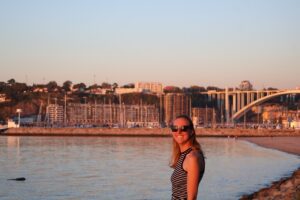
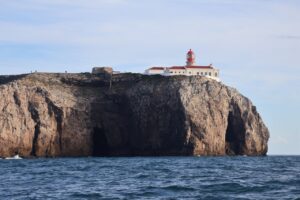
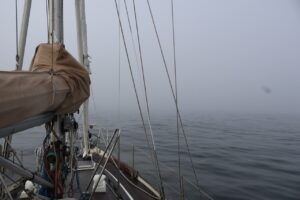
Passing down this coast in October and November meant we were frequently faced with 4m+ swell and strong Southerly winds, making it very difficult to make progress South. Spending each night in a marina was also affecting the bank balance and was definitely not the type of cruising we’d signed up for!
We enjoyed spending time in Nazare waiting out a storm, as well as exploring Porto and Lisbon along the Portuguese coast, but were extremely relieved once passing the South West corner of Portugal into the Algarve coast. The swell calms down, the weather warms up and finally we could anchor again!
Once back in Spain, we pressed on down the coast, headed for Alcaidesa Marina in La Linea, situated next to Gibraltar and our launching-off point for the Canaries. Although we were pushed for time, December had rolled around and the conditions for making the crossing to the Canaries were getting more and more difficult. Not only that but we also hit a curve ball with insurance which meant replacing our standing rigging in Puerto Sherry.
More on that coming soon in our blog on ‘how to replace your standing rigging’.
Once we’d made it to La Linea, the weather did not want to play ball. Low pressure systems, which had displaced the Azores high, that normally brings good North Eastern winds down the Moroccan coast, instead meant huge swells and South Westerly winds for weeks at a time. This made a departure from Gibraltar impossible. In the lead up to Christmas the idea of a Christmas spent in La Linea was looking more and more likely.
Thankfully the weather changed for the better. On 17th December we saw a clear window and were able to head straight for Las Palmas, arriving on 23rd December. A day before we were due to meet Fran’s family who had flown in for Christmas – phew!
Enjoying some precious time in Las Palmas with both of our families over Christmas and New Year, meant the liveaboard lifestyle took a back seat for a couple of weeks. But before long the New Year rolled around and we had our sights set on Cape Verde. This felt like the true start of our Atlantic crossing.
Preparing for the Atlantic Ocean crossing
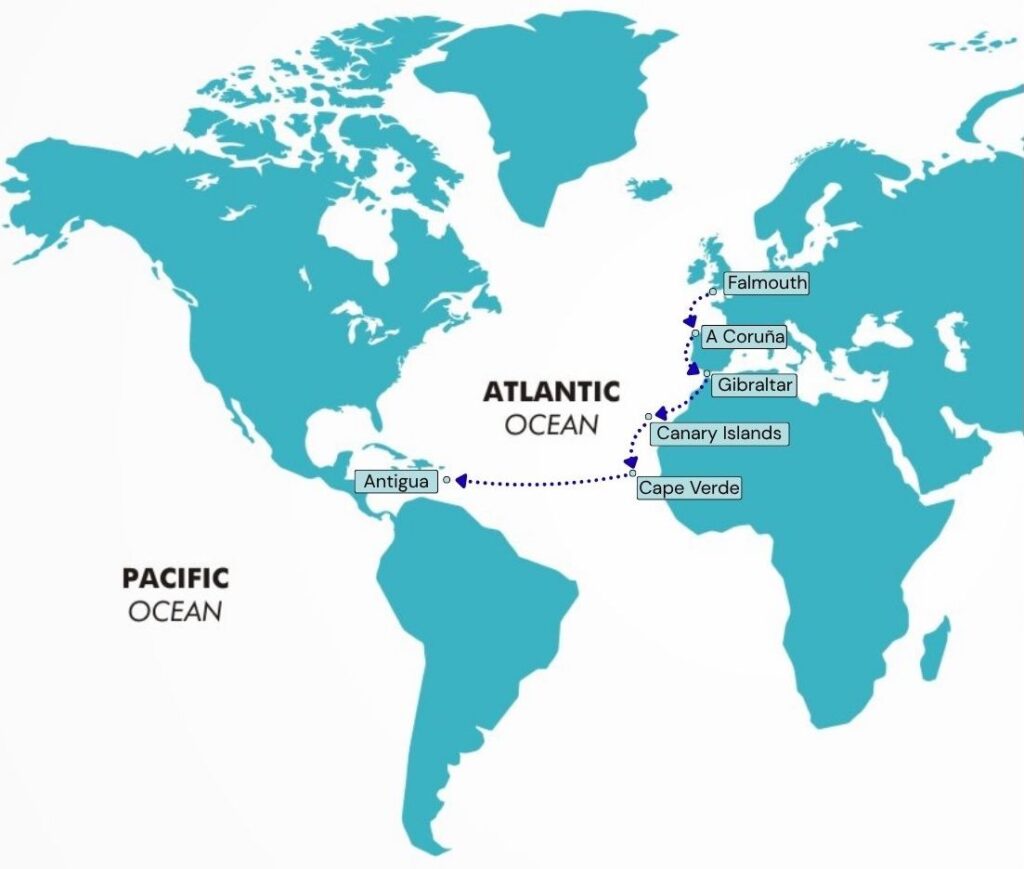
Our route across the Atlantic started in Las Palmas, with a stop off in Mindelo, Cape Verde and then making landfall in the Caribbean in Jolly Harbour, Antigua.
Rather than the more traditional route from the Canaries straight to the Caribbean, we opted for a slight detour via Cape Verde. This let us take a break, explore a new country and fix a few things that had broken on the passage from Las Palmas before we set off on the 2100nm passage to Antigua.
We enjoyed time spent exploring Mindelo and the adjacent island Santa Antao, and taking a breather before the forthcoming 3 week crossing. Stocking up on a final few provisions, topping up with water and picking up our crew for the crossing, our time in Mindelo felt like the culmination of our preparations over the previous 4 months. We’d worked so hard to get the boat ready, get ourselves ready, we now just had to go for it.
Our Atlantic crossing took 18 days. Departing on 27th January, we faced some big rolling swell then very light but choppy swell, light wind days and then strong wind days. We experienced the whole range of conditions over the nearly three week passage.
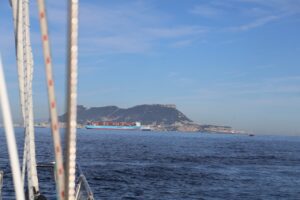
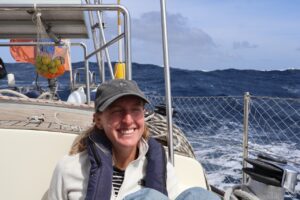
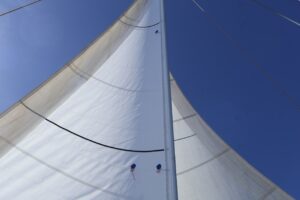
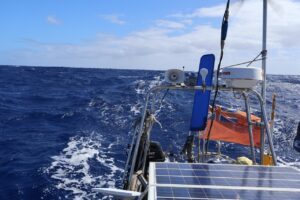
This was truly a once in a lifetime opportunity. Crossing the Atlantic Ocean was a part of our journey that we spent so long preparing for, that when the time came we totally were ready. What transpired was a passage where we had time to reflect, and soak in the feelings of solitude and a connection with the water. To enjoy the luxury of such peace and serenity out in the ocean, thousands of miles from land.
The crossing was an enormous part of our journey, and something we will never forget. The full story of Atlantic will take some time to digest and put into words. Keep an eye out for our Atlantic Crossing roundup available shortly…
Antigua was our first sight of land in 18 days, and a huge feeling of relief and accomplishment. We made landfall in Jolly Harbour, to check in and complete the customs formalities, then spend a few days in the marina to relax and put the boat back to normality. This was the starting point of our Caribbean cruising and we couldn’t be more excited for where our journey takes us next!
What we learned from our first 6,000 miles
Starting our trip as relative beginners meant we set off with the expectation that we had a lot to learn along the way. Yet what I was expecting to learn (how to sail offshore, how to trim the sails, how to manoeuvre in marinas), were important lessons, but definitely not the most valuable or long lasting.
The change of lifestyle
Transitioning from living in a one bedroom flat in Central London, to living on board Calidris Alba has been a huge adjustment. We changed the way we prioritise our day to day lives, from having everything we could ever need at our finger tips; supermarkets, unlimited running water, restaurants, bars, a fully equipped kitchen, plus all of our friends and family very close by.
Moving onboard meant selling, donating or storing most of our belongings, taking with us only the essentials that we would need for our life on the boat. Fran sold our old clothes, homeware and unwanted kitchen equipment at a local car boot sale. We battled the world of Facebook marketplace and Vinted to earn a small amount of money for our best items, then everything else went to the charity shop.
The whole process of sorting through our possessions, then deciding what to keep and what to say goodbye to was eye opening. It opened our minds to the reality that things we once considered essential (new clothes, new shoes, nice home decorations), we would have to sacrifice for a new life on the boat. Learning to change our priorities became a huge adjustment in the whole process of moving on board, much more than we had anticipated.
What we’d do differently
When we first started planning our move on to the boat, we did our best to line up each stage sequentially. The idea being to seamlessly go from leaving our jobs, to moving out of our flat, to moving on board, to exploring the UK, to setting sail across the Bay of Biscay, to crossing the Atlantic… We very quickly learnt that these plans are impossible to stick to.
Looking back we definitely should have given more time to get used to being on board and more time to explore the UK coastline. We were so excited to welcome family and friends on board, and loved spending time sharing our dream with them. Yet with the weather changing we had to keep moving South, because that’s where our adventure lies.
The Calidris Crew
Thanks for taking the time to read about our journey on Calidris Alba. We have loved sharing our journey so far, and feel so excited for where we’re headed next. Every day onboard is filled with new experiences, excitement and joy, and this blog is one of the ways we hope to share that with you.
For real-time updates on where Calidris Alba has taken us, follow along on Instagram.